Parking lot paint has a life, and on the Peninsula it's shorter than most property managers expect. Sun breaks it down, tires wear it off, street sweepers scrub it, and the winter rain and fog get under it. Most lots we see need re-striping every two to four years. Here are the signs it's time, and what to do about it.
Sign one: drivers can't find the stall ends. Stand at the entrance and look down a row. If the lines are clear all the way to the end, you're fine. If they fade out halfway or you can only see them because you know where they should be, cars will park wherever they like, and a row that should hold twelve holds nine.
Sign two: the ADA spaces are grey. The blue on an accessible space and the white symbol fade faster than the stall lines because they cover more area. A faded accessible space is the first thing an inspector or a complaint will land on, and it's a liability the property carries every day it stays that way.
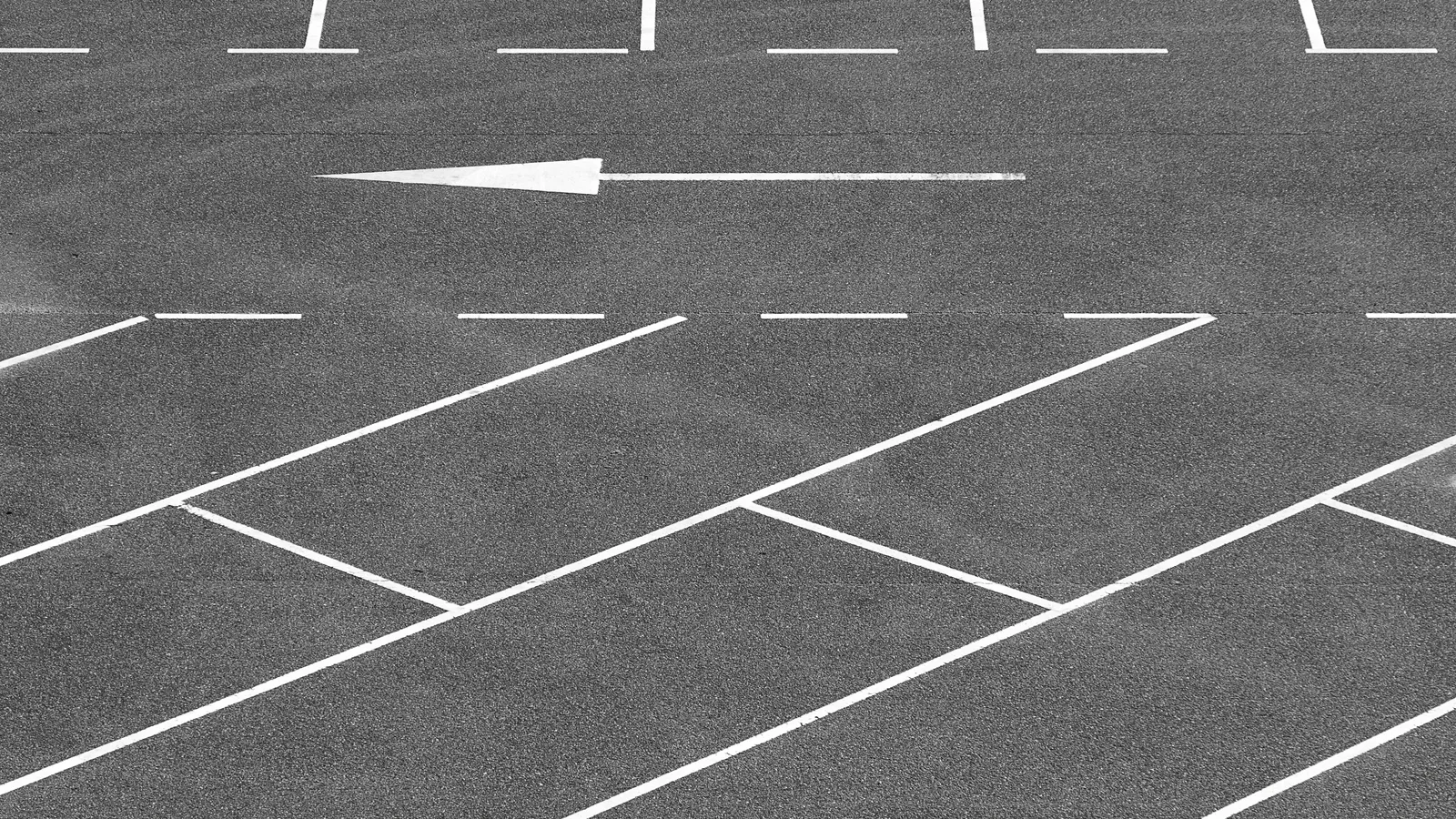
Sign three: arrows and stencils are ghosts. One-way arrows, STOP bars, drive-thru arrows and NO PARKING lettering exist to change behavior. When they're faint, they don't. If you've seen cars going the wrong way down an aisle that's supposed to be one-way, the arrow isn't doing its job anymore.
Sign four: the fire lane isn't red. Fire lane curbs and lettering are inspected by the fire department, and a faded red curb with unreadable FIRE LANE — NO PARKING letters is a citation waiting to happen. These should be touched up between full re-stripes, not left until the lot is done.
Sign five: the lot has been sealed or repaved. New sealcoat and new asphalt cover the old lines completely, so they have to be re-laid from scratch — and it's a chance to fix a layout that never worked, add EV stalls, or bring the accessible spaces up to code. Fresh sealcoat needs to cure before paint goes down; the manufacturer's cure time is the rule, and rushing it ruins the lines.
Why washing first matters. Paint bonds to what's under it. A lot striped over dirt, oil and loose chalk is a lot that fades early and peels where the cars leak. We power wash the lot — degreasing every stall with oil in it — let it dry, then snap fresh chalk lines and paint. It's the difference between lines that last two years and lines that last four.
How to plan it. Most re-stripes are done in phases, overnight or on a weekend, so the lot never fully closes: we cone a section the day before, wash it one night, paint it the next, and move on. Traffic paint is dry to the touch in about 20 minutes and takes cars in an hour or two. AQ Professional Power Washing & Striping does both the washing and the striping across San Mateo County; call or text (650) 274-6797 for a free estimate with the stall count and the options broken out.