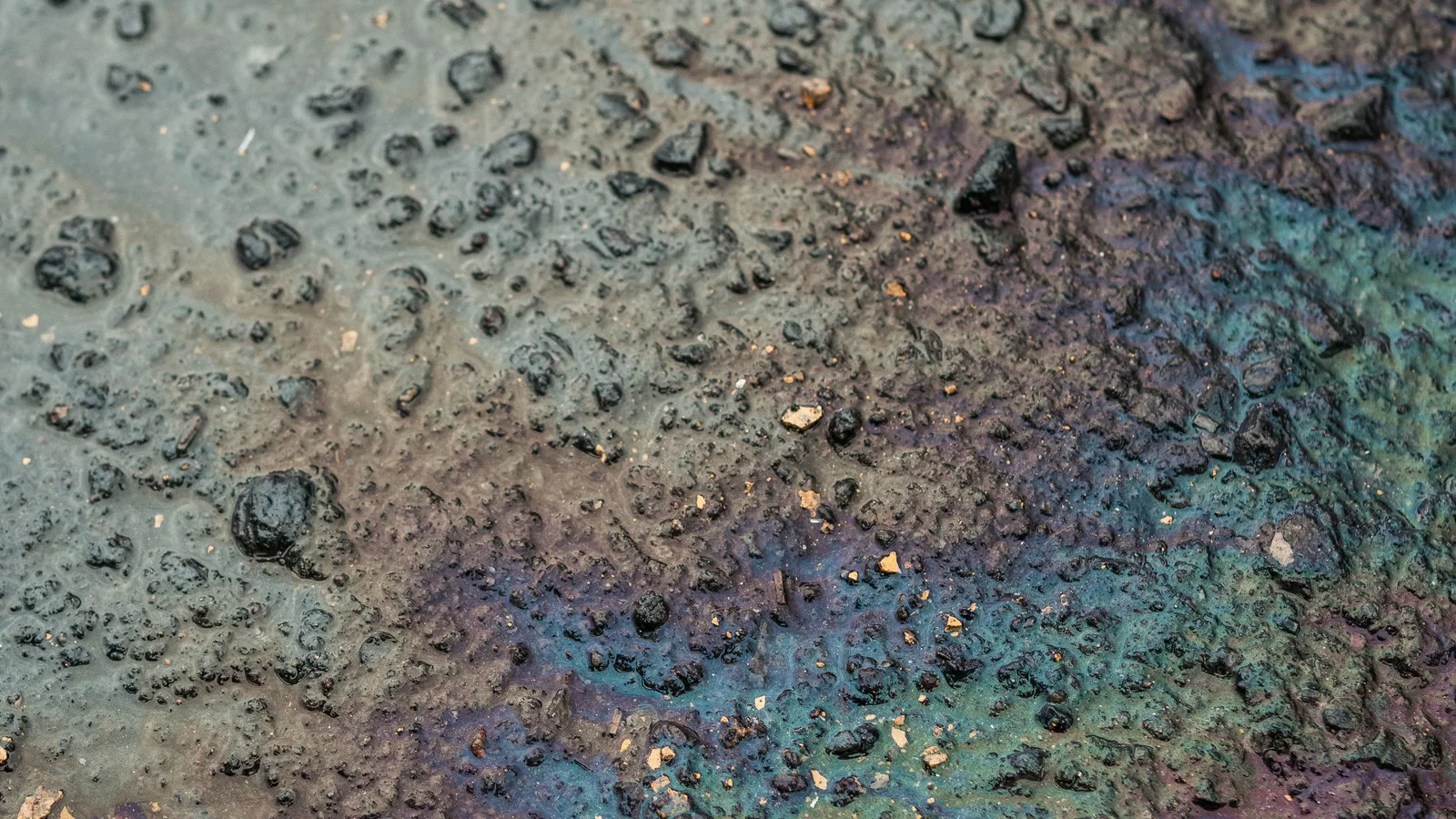
Oil is the stain people have usually tried to fix themselves before they call us, and the driveway often looks worse for it — a big grey smear where a small black spot used to be. That's because oil doesn't sit on concrete; it soaks into it. Getting it out means getting it out of the pores, and that takes a different approach from cleaning dirt.
What doesn't work. A garden hose does nothing. A cold-water pressure washer, including a rented one, pushes the oil around and into the surrounding concrete — that's the smear. Cat litter or sawdust is fine for a fresh spill in the first hour, but once the oil has soaked in it only takes what's on top. Dish soap and a brush will lighten a fresh spot with a lot of scrubbing and do nothing to an old one.
What does work: three things together. First, a degreaser matched to the stain — motor oil, transmission fluid, hydraulic fluid and cooking grease each break down differently — applied and given time to work. Second, hot water. Heat thins the oil and lets the degreaser carry it out of the concrete; this is the step a homeowner can't replicate, and it's the one that matters. Third, a surface cleaner over the whole area afterward so the treated spot blends into the concrete around it instead of leaving a clean square in a dirty slab.
What to expect. A fresh stain — weeks old — usually comes out completely. A stain that's been down a year lightens dramatically and may leave a faint shadow. A stain that's been down for years, re-fed every week by the same dripping car, will lighten but rarely disappear in one visit; the oil has gone deep, and it wicks back up over the following weeks. We'll tell you which you have before we start, because the honest answer up front beats a surprise after.
Sealed and unsealed concrete behave differently. Sealed concrete — a garage floor with a coating, a stamped patio with a sealer — holds the oil on top, and it comes off easily. Bare broom-finish concrete, which is what most driveways and parking stalls are, drinks it in. If you have a car that drips, sealing the driveway after it's cleaned is the cheapest insurance there is.
Parking lots and shops are the same problem at scale. Every stall in a lot has a spot where the engine sits, and every service bay in an auto shop has a floor that's been fed oil for a decade. We degrease stall by stall or bay by bay with hot water, and on a lot that's about to be striped it's not optional — paint won't bond over oil, and the stripes will lift exactly where the cars park.
The one thing to do today: if there's a fresh spill, cover it with cat litter or sawdust, leave it overnight, sweep it up, and don't hose it. Then text AQ Professional Power Washing a photo at (650) 274-6797. We'll tell you what will come out, what will lighten, and what it'll cost — free, and usually the same day.